50/50 Custody Schedule: Options, Examples & What Parents Need to Know
Jun 16
/
Jenifer Marks, Esq.
50/50 Custody Schedule: Options, Examples & What Parents Need to Know
When parents begin discussing custody arrangements, one of the most common goals is a 50/50 custody schedule.
The idea sounds simple enough. The child spends half of the time with one parent and half of the time with the other.
However, many parents are surprised to learn that there is no single "50/50 custody schedule." In fact, there are dozens of ways to divide parenting time equally.
The best schedule is not necessarily the one that looks best on paper. The best schedule is the one that works for your child, your family's circumstances, and your ability to co-parent effectively.
We explore these options in more detail throughout this article and in our FREE class, Parenting Plans & Custody Agreements.
What Is a 50/50 Custody Schedule?
A 50/50 custody schedule is a parenting arrangement where a child spends approximately equal residential time with each parent.
While many parents focus on achieving equal time, a successful parenting plan considers much more than percentages. School schedules, transportation, work commitments, extracurricular activities, the child's age, and the distance between homes can all affect whether a particular schedule works.
The goal is to create clear expectations and reduce future conflict in a residental custody schedule. Acces the FREE 20 minute video that discusses 50/50 cusody schedules, and more!
Common 50/50 Custody Schedule Options
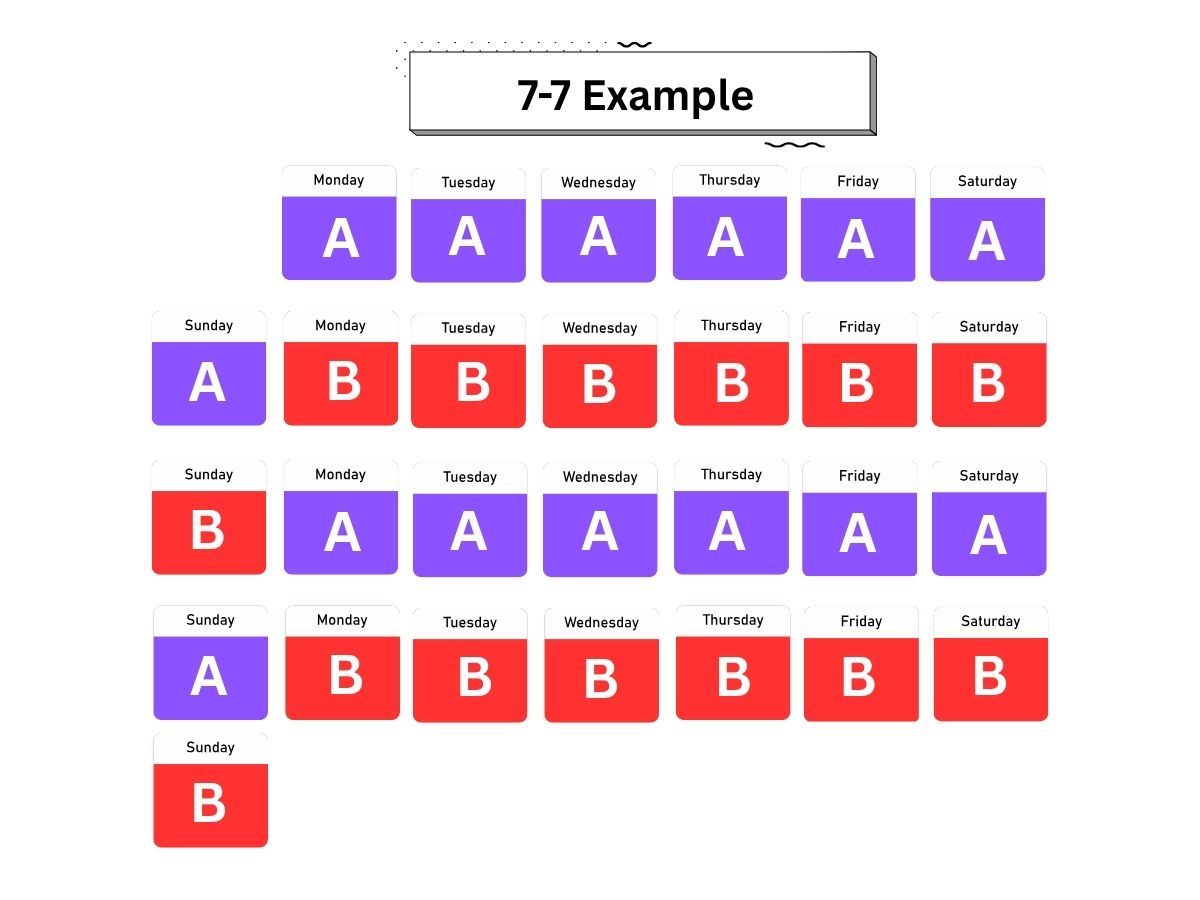
Week-On / Week-Off Schedule
One parent has the child for seven consecutive days before the child transitions to the other parent for the following week.
Often works well for:
- Older children
- Teenagers
- Parents who live close to school
- Families wanting fewer exchanges
Potential challenges:
- Long periods away from the other parent
- Difficult for some younger children
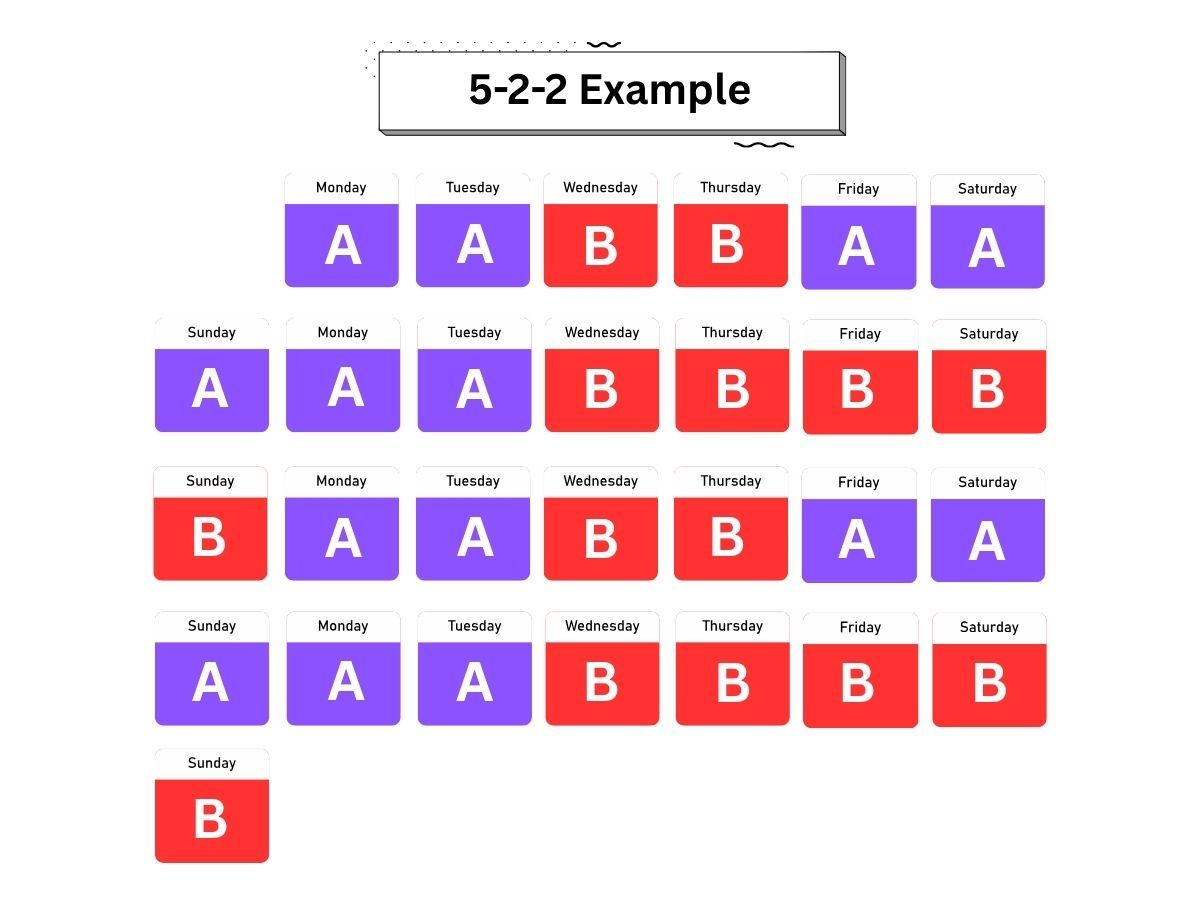
5-2-2 Schedule
Each parent receives the same weekdays every week while alternating longer blocks of parenting time.
Often works well for:
- School-aged children
- Parents seeking consistency
Potential challenges:
- More complicated initially
- Requires organization
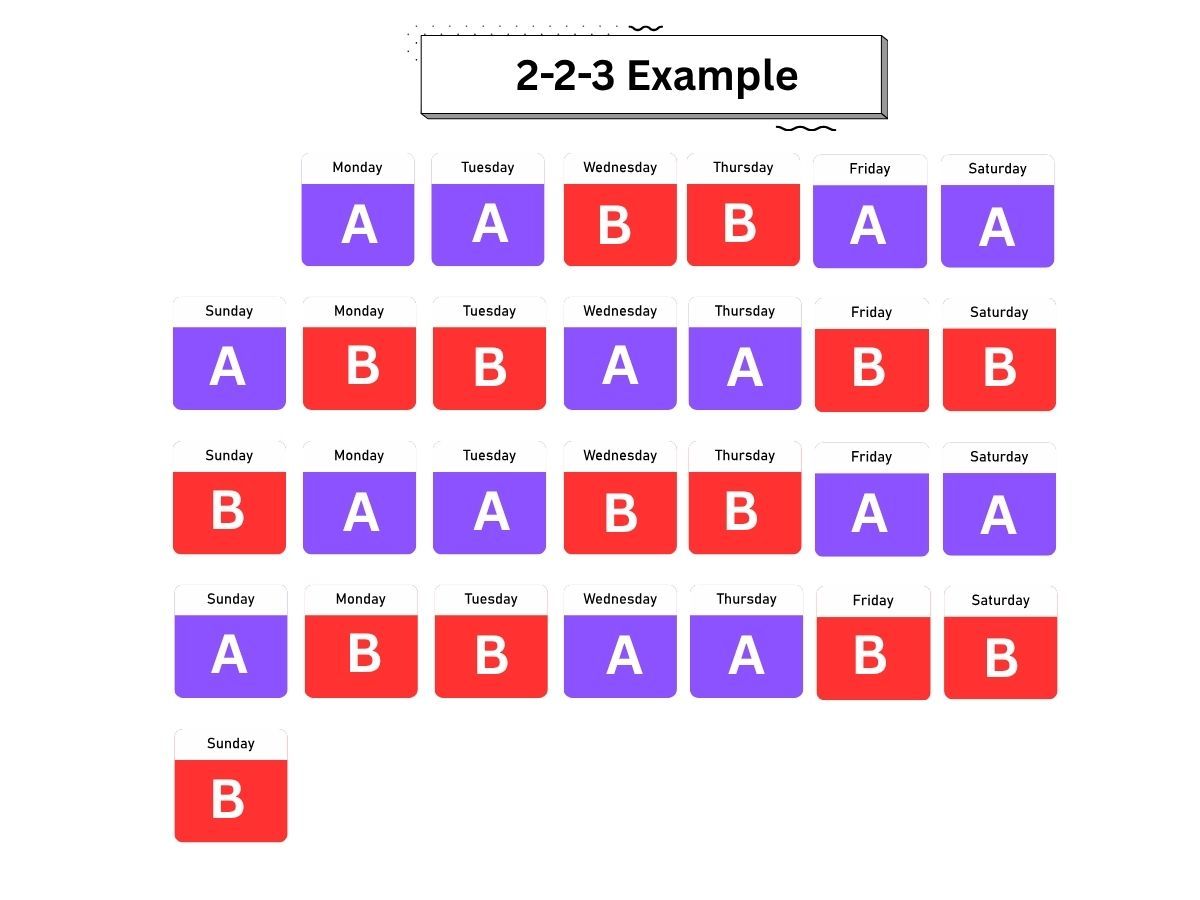
2-2-3 Schedule
The child spends:
Week 1
Monday and Tuesday with Parent A
Wednesday and Thursday with Parent B
Friday, Saturday, and Sunday with Parent A
Week 2
Monday and Tuesday with Parent B
Wednesday and Thursday with Parent A
Friday, Saturday, and Sunday with Parent B
Often works well for:
- Younger children
- Parents who want frequent contact
- Parents who live close to one another
Potential challenges:
- Frequent exchanges
- More coordination required
- Can be difficult if parents have high conflict
Want to know more about these custody agreements? Take our FREE class here!
Less Common 50/50 Custody Arrangements
Not every family fits neatly into a traditional schedule.
Some parents create customized arrangements based on their unique circumstances.
School-Year / Summer Rotation
Children spend the school year primarily with one parent and extended summer periods, school breaks, and holidays with the other parent.
This arrangement is sometimes used when parents live farther apart.
Seasonal Schedules
Some parents maintain a 50/50 schedule during the school year but use a different schedule during summer vacation.
For example, parents may alternate weeks during the school year and then switch to longer parenting blocks during the summer when school is not in session.
These arrangements can provide additional flexibility while still maintaining an overall shared custody structure.
Rotating Work Schedule Plans
Parents who work non-traditional schedules, such as firefighters, nurses, medical professionals, pilots, law enforcement officers, or military personnel, often create parenting plans around their work calendars rather than traditional weeks.
Extended Block Schedules
Some families alternate longer blocks of time, such as:
- Two weeks on/two weeks off
- One month on/one month off
- Other customized arrangements
These schedules are less common but may be appropriate for older children or unique family situations. You can read more about shared custody arrangements here.
Learn more about 50 /50 custody schedules in our FREE Class!
50/50 Cusotody is More Than Where a Child is Physically
One of the biggest misconceptions parents have is that a 50/50 custody schedule is simply about dividing a child's time equally between two homes.
In reality, successful shared custody involves much more than residential time. Many parents spend hours negotiating a 50/50 residential schedule, but never discuss how decisions will actually be made. The Minnesota Judicial Branch explains that legal custody generally involves the right to make major decisions regarding a child's upbringing, while physical custody relates to the child's daily care and living arrangements.
A well-designed parenting plan should address major decision-making, routine day-to-day parenting decisions, and a clear dispute resolution process. Otherwise, parents may find themselves back in court arguing over issues that could have been addressed in the agreement from the beginning.
In our FREE class, Parenting Plans & Custody Agreements, we discuss these provisions and other parenting plan terms designed to reduce conflict and avoid costly future litigation. Start today!